
Rotator cuff tear rehabilitation typically moves through four phases, and these phases include rest and protection, gradual range-of-motion exercises, strengthening, and a return to normal activity. Orthopedic surgeons guide patients through this process. They adjust the timeline based on tear severity, whether surgery was performed, and the individual’s healing response, because each patient recovers at a different pace. Here is more information on what rehabilitation involves:
What Is a Rotator Cuff Tear?
The rotator cuff consists of muscles and tendons; these structures stabilize the shoulder joint, which allows the arm to rotate. A tear occurs when one or more of these tendons separates from the bone, either partially or completely. Some tears develop gradually from repetitive overhead motion, while others result from a single traumatic event, such as a fall. Patients with a rotator cuff tear may report shoulder pain and weakness. They may also report reduced range of motion, particularly when lifting the arm overhead.
Diagnosis usually involves a physical examination paired with imaging. Orthopedic surgeons use this information to recommend conservative treatment or surgical repair; their recommendation depends on tear severity and the patient’s activity level. When the tear is small and the patient has low activity demands, conservative treatment may be appropriate.
What Does Rehabilitation Involve?
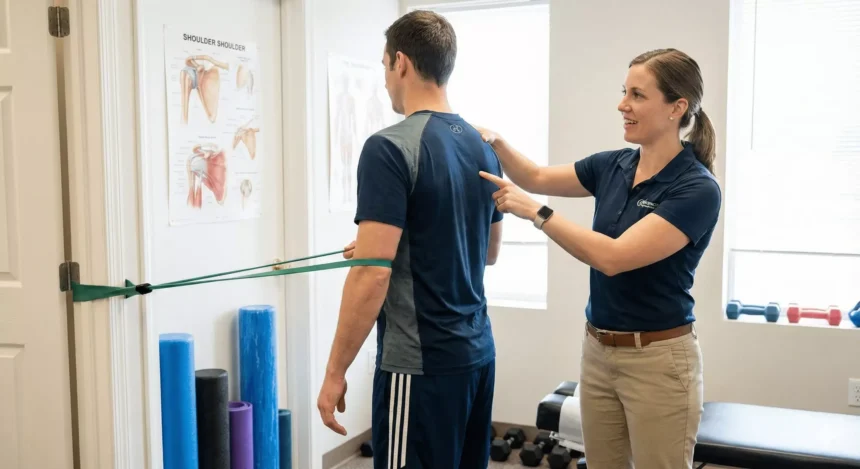
Rotator cuff tear rehabilitation follows a structured, phased approach. The first phase focuses on protecting the shoulder until inflammation decreases. Passive range-of-motion exercises begin shortly after, and a healthcare professional guides each movement. These exercises prevent stiffness but do not strain the healing tendon.
As healing progresses, patients shift toward active range-of-motion exercises and light resistance training. The final phase targets strength and endurance. It prepares the shoulder for daily tasks, work, or sport, which sometimes place greater demands on the joint. Each phase builds on the last, and progression depends on the patient’s pain levels, surgical findings, and healthcare evaluation.
What Are Effective Recovery Tips?
Consistently practicing prescribed exercises can improve recovery outcomes. Patients who skip sessions or rush through the strengthening phases risk re-injury or incomplete healing, so adherence to the program is key. Pain should guide activity. Mild discomfort during stretching is common, but sharp or worsening pain signals a need to pause and consult the care team, since continuing may damage the healing tissue.
A few additional practices support steady progress:
- Apply ice after therapy sessions to manage swelling and discomfort.
- Maintain posture awareness to reduce stress on the shoulder joint.
- Prioritize sleep to promote tissue repair.
How Can Orthopedic Surgeons Help?
Orthopedic surgeons manage care from diagnosis through full recovery. They determine whether a tear requires surgical repair or responds well to physical therapy alone, and they base this decision on tear size, patient age, and activity demands. When a patient undergoes surgery, the surgeon may design a rehabilitation timeline that is specific to the repair technique used. Orthopedic surgeons also monitor healing through follow-up imaging and physical exams. These evaluations catch complications such as stiffness or re-tearing early, allowing the care team to respond before a minor setback becomes a serious problem.
Consult an Orthopedic Surgeon Today
Rotator cuff tear rehabilitation includes protection, motion restoration, strengthening, and return to activity, but the pace and specifics depend on each patient’s injury and health status. Working with an orthopedic surgeon throughout this process supports a safer, more complete recovery. If you have shoulder pain or limited mobility, schedule a consultation with an orthopedic surgeon to start an individualized treatment plan.