

The shoulder is one of the body’s most mobile joints. A network of muscles, tendons, and ligaments works together to support a wide range of motion, and the rotator cuff plays a fundamental role in keeping the joint stable. Pain may develop from overuse and injury; age-related wear is also a possible cause. Here’s information about several exercises and therapies used to relieve shoulder pain:
Reviewing Regenerative Therapy Options
Regenerative therapies aim to reduce shoulder pain by supporting the body’s natural repair process. Two approaches that providers may discuss in this category are platelet-rich plasma (PRP) therapy and stem cell therapy. Both use materials drawn from the patient’s own body, and a trained specialist performs each procedure in a clinical setting. PRP therapy begins with a blood draw. A provider processes the blood to concentrate the platelets, then injects the resulting solution into the affected shoulder joint or tissue. Platelet-rich plasma contains growth factors that have healing properties. Providers may discuss this approach for conditions such as rotator cuff injuries and tendon irritation. The number of sessions varies by individual, and your provider outlines a schedule based on your evaluation.
Stem cell therapy follows a similar concept, but the source material differs. Providers may draw stem cells from bone marrow or adipose tissue, process them, and deliver them to the injured area. Because each patient’s situation differs, your provider reviews whether this therapy aligns with your diagnosis and health history before moving forward.
Exploring Acoustic Shockwave Therapy
Acoustic shockwave therapy delivers targeted sound waves to specific areas of the shoulder. A provider may use a handheld device to transmit these waves through the skin and into the underlying tissue. Providers discuss this approach for conditions involving tendons and soft tissue, including calcific tendinitis and chronic tendon issues, and it takes place in a clinical or medical office setting. Sessions are brief, and a course of treatment may involve multiple visits scheduled over several weeks. The device settings and treatment duration vary based on your condition and your provider’s assessment. Ask your provider whether this approach fits your diagnosis, what a typical treatment schedule looks like, and what the key steps involve.
Performing Strengthening Exercises
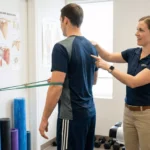
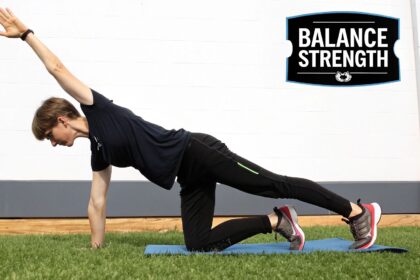
Joint-strengthening exercises provide a practical foundation for shoulder rehabilitation. A physical therapist or healthcare provider designs a program based on an evaluation of your shoulder’s strength, range of motion, and stability. Programs may include the following movements:
- Resistance band external and internal rotations
- Shoulder blade squeezes
- Wall slides
- Scapular stabilization movements
- Isometric shoulder holds
Resistance band exercises target the rotator cuff muscles that stabilize the joint. Your therapist sets the resistance level and repetition count, and they adjust both as your strength builds. Scapular stabilization movements train the muscles that support posture and upper body alignment. Isometric holds involve pressing the arm against a fixed surface without movement, which allows muscle activation while minimizing joint stress. Follow your provider’s written plan, and log each session; this record helps your provider track your progress and adjust the program as needed.
Find Treatment for Shoulder Pain
PRP therapy, stem cell therapy, acoustic shockwave therapy, and joint-strengthening exercises address shoulder pain through different mechanisms. Regenerative options aim to support tissue repair, and shockwave therapy may target soft tissue conditions. Strengthening exercises build the stability the joint needs for daily activity. If you have lingering shoulder pain, schedule a visit with a specialist to discuss your symptoms and identify an approach that fits your needs.