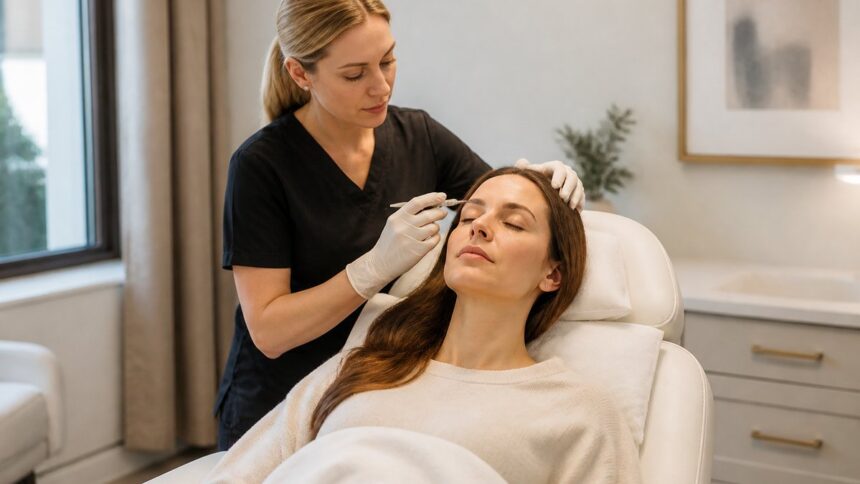
Botox treatments address facial muscle activity to reduce the appearance of dynamic wrinkles and support facial contouring. By temporarily relaxing targeted muscles, Botox helps soften expression lines and modify facial contours in selected areas. Treatment plans assess facial anatomy, muscle movement, and individual aesthetic goals to guide injections in areas such as the forehead, eyes, and jawline. Here is more information about the role of Botox in facial contouring and rejuvenation:
Evaluating Facial Aesthetic Concerns
Facial aesthetic evaluations help providers identify areas that may benefit from Botox treatments. During consultations, providers examine facial expressions, muscle movement, and skin appearance. They assess areas such as the forehead, around the eyes, and jawline to identify wrinkles and muscle activity.
Providers also review facial symmetry, proportions, and individual treatment goals. Because facial anatomy and muscle activity vary, recommendations depend on each patient’s assessment. These evaluations help determine appropriate injection sites and develop personalized treatment plans for facial contouring and rejuvenation.
Smoothing Forehead Lines
Horizontal forehead lines develop from repeated muscle movements, particularly when raising the eyebrows. Botox injections temporarily relax targeted forehead muscles to reduce the appearance of these lines. Providers assess facial anatomy and muscle activity to determine appropriate injection sites and dosages. Treatment aims to smooth forehead wrinkles while maintaining natural facial expressions. Treatment planning typically includes:
- Assessing Muscles: Examining forehead movement.
- Selecting Injection Sites: Identifying treatment areas.
- Adjusting Dosages: Personalizing Botox amounts.
- Monitoring Results: Evaluating treatment responses.
Reducing Crow’s Feet With Botox
Crow’s feet develop from repeated muscle contractions around the eyes during facial expressions such as smiling and squinting. Botox injections temporarily relax targeted muscles to reduce the appearance of fine lines around the outer corners of the eyes. Providers assess facial anatomy and muscle movement to determine appropriate injection sites and dosages. Treatment aims to soften visible wrinkles while preserving natural facial expressions.
Contouring the Jawline
Botox injections into the masseter muscles offer a nonsurgical option for modifying the appearance of the jawline. These muscles support chewing and may contribute to a wider or more squared facial shape when enlarged. By temporarily reducing muscle activity, Botox may gradually decrease masseter size and create a slimmer lower facial contour.
Jawline contouring begins with an evaluation of facial anatomy, muscle strength, and jaw movement. Providers review habits such as teeth grinding and nighttime clenching, which may contribute to enlarged masseter muscles. During examinations, providers assess muscle size and symmetry to determine appropriate injection sites and dosages.
Providers also assess how the jawline relates to the chin, cheeks, and overall facial proportions. Treatment results develop gradually as the targeted muscles respond to Botox injections. Follow-up appointments allow providers to monitor changes and recommend additional treatments based on individual aesthetic goals.
Schedule Your Botox Appointment Today
Botox consultations help determine appropriate treatment options for facial rejuvenation and contouring. During appointments, providers review medical history, assess facial anatomy, and discuss individual aesthetic goals. Treatment recommendations may address forehead wrinkles, crow’s feet, or jawline contouring based on individual needs. Schedule a Botox consultation today to explore personalized treatment options and learn more about the procedure.