
Surgery may correct refractive errors when glasses or contacts no longer provide adequate visual correction. Your prescription, corneal thickness, eye health, and previous procedures help determine the best option for your eyes. Laser procedures reshape the cornea, while implantable options use a different method to correct vision. Here is how to determine which laser eye surgery is right for you:
Evaluate LASIK Candidacy
LASIK uses a laser to reshape the cornea and correct certain refractive errors. Your prescription forms part of the assessment, although corneal measurements also influence suitability. Eye health is evaluated during screening, particularly when existing conditions affect the cornea or tear film. Previous eye procedures can provide additional information about the structure and condition of your eyes.
An eye doctor assesses corneal thickness carefully because LASIK removes a controlled amount of corneal tissue. Existing dry-eye symptoms are also assessed because the procedure can temporarily affect corneal nerves. Prescription stability is another factor when reviewing suitability for this laser eye surgery treatment; age and overall eye health provide further context for the assessment.
Assess PRK Candidacy
PRK treats the cornea with an excimer laser, but its surgical approach differs from that of LASIK. The procedure may suit patients whose corneal thickness limits their suitability for LASIK. Higher prescriptions also influence the comparison when a surgeon reviews available laser options. Corneal shape provides another key measurement during the assessment. Recovery follows a different pattern because PRK treats the corneal surface layer rather than creating a corneal flap. A specialist reviews your prescription alongside these findings, and other measurements are evaluated before selecting an appropriate approach.
Explore ICL Candidacy
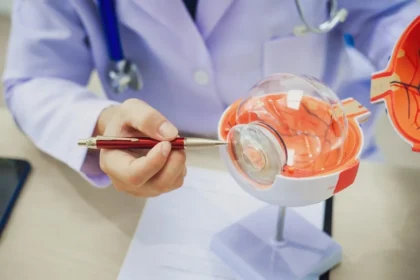
ICL corrects vision through an implanted lens while leaving the corneal tissue intact. The lens sits behind the iris and in front of the natural lens, providing a different approach to vision correction. High levels of nearsightedness are a common indication for ICL, while certain forms of astigmatism are addressed with toric ICL lenses. Previous eye conditions affect ICL suitability, and several factors help distinguish it from corneal laser procedures:
- Prescription: Higher levels of myopia are a key factor when evaluating ICL as an alternative to laser correction.
- Astigmatism: Toric ICL lenses correct certain amounts of astigmatism alongside myopia.
- Corneal thickness: Corneal measurements provide context when comparing ICL with procedures that reshape the cornea.
- Dry-eye history: Existing symptoms form part of the broader eye assessment and help inform the choice of procedure.
- Natural lens: The position and condition of the natural lens are assessed because the ICL is positioned in front of it.
Examine Intacs Candidacy
Intacs are designed to address specific corneal conditions, particularly those involving an irregular corneal shape, and are not typically used for routine refractive correction. The severity and pattern of the corneal changes help determine whether this approach is appropriate. Keratoconus should be evaluated when getting Intacs because changes in corneal structure can affect vision. Detailed corneal measurements during the assessment provide additional information about suitability.
Vision distortion occurs when an irregular cornea prevents light from focusing properly. Intacs suitability depends on the cornea’s structure, thickness, and the specific abnormalities present. Patients with certain corneal abnormalities require a different approach when conventional laser correction is unsuitable, and Intacs provide a treatment option for selected cases of corneal ectasia.
Schedule Your Laser Eye Surgery Evaluation
The right laser eye surgery depends on how your eyes respond to different surgical approaches, not just the strength of your prescription. A detailed eye examination provides measurements that help determine whether corneal reshaping, implantable lenses, or other corneal treatments are appropriate. Discuss your vision goals and medical history with an eye specialist during the evaluation. Schedule a comprehensive eye examination today to identify the vision correction option suited to your eyes.