

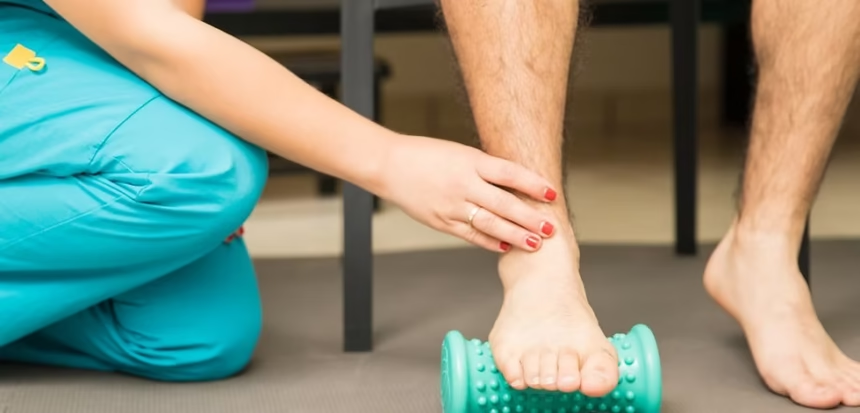
Plantar fasciitis is inflammation of the tissue connecting the heel to the toes, which often develops from repetitive strain, improper footwear, or excess body weight. Symptoms include sharp heel pain, and the pain may be most severe with the first steps in the morning. Treatment typically includes orthotics, physical therapy, anti-inflammatory medication, and ice therapy. Here is more information on this condition, its causes, and treatment options:
What Is Plantar Fasciitis?
Plantar fasciitis occurs when the plantar fascia becomes inflamed; this thick band of tissue runs along the bottom of the foot. It connects the heel bone to the toes while supporting the foot’s arch during movement. Because the tissue absorbs repeated stress, small tears can develop, triggering pain and swelling.
Podiatrists diagnose the condition based on patient history and a physical examination. When the condition is unclear, imaging may be used to rule out other underlying causes. Left untreated, the inflammation has the potential to persist for months, and its effects may change how a person walks or stands throughout the day.
What Causes It?
Several factors contribute to plantar fasciitis. Runners and long-distance walkers face a higher risk. Repetitive impact gradually wears down the fascia’s elasticity, which makes the tissue more vulnerable to small tears. Excess body weight adds pressure to the arch with every step; this accelerates tissue breakdown. Unsupportive footwear, particularly shoes lacking arch support or cushioning, forces the fascia to compensate for structural weaknesses.
What Are the Symptoms?
Plantar fasciitis presents with a range of symptoms:
- A sharp, stabbing pain near the heel
- Tenderness on the bottom of the heel
- A dull ache that intensifies after exercise
The fascia stretches and loosens with movement but tightens again during periods of rest, which accounts for the fluctuating nature of these symptoms throughout the day.
What Are the Treatment Options?
Podiatrists generally recommend a combination of approaches tailored to the condition’s severity and the patient’s lifestyle. Orthotics redistribute pressure across the foot and support the arch, which helps reduce strain on the plantar fascia. Physical therapy incorporates targeted stretches and strengthening exercises to improve flexibility in the calf muscles and Achilles tendon, which lowers tension on the fascia over time. Nonsteroidal anti-inflammatory medication can reduce swelling and manage pain during flare-ups; ice therapy applied directly to the heel also helps control inflammation.
When conservative methods fail to produce results after several months, podiatrists may suggest minimally invasive surgery. This procedure involves releasing part of the plantar fascia to relieve tension. Patients typically recover faster than with traditional surgical approaches. Some cases resolve without surgical intervention. Patients benefit from committing to consistent treatment for conservative methods to be effective, and those who do may be more likely to avoid surgery altogether.
Consult a Podiatrist
Plantar fasciitis develops gradually, but its effects on daily movement can be significant if ignored. Recognizing the early symptoms, such as morning heel pain and tenderness after rest, allows for quicker intervention. Treatment options range from orthotics and physical therapy to medication and ice therapy. If you notice persistent heel pain, schedule an appointment with a podiatrist for an accurate diagnosis and a treatment plan suited to your specific needs. Addressing the condition early helps prevent it from becoming a long-term, disruptive problem.