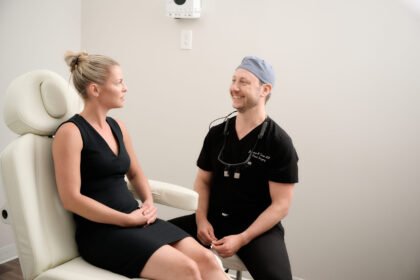
Mohs surgery is a specialized approach that removes skin cancer layer by layer while the tissue is examined under a microscope. This method removes all detectable cancer cells, and it leaves as much healthy skin as possible around the area. Here is more information on skin cancer surgery and what the process involves:
What Is Mohs Surgery?
Mohs surgery is a type of skin cancer surgery that removes cancerous tissue in stages, and it uses immediate microscopic review to guide each step. The procedure is usually recommended for certain nonmelanoma skin cancers. It may be selected when tumors appear in areas where preserving healthy tissue matters for function or appearance. The process involves:
- Layered removal: The surgeon removes thin layers of tissue, and each layer is checked under a microscope for remaining cancer cells.
- Microscopic mapping: The tissue is processed and mapped so the surgeon knows exactly where cancer cells remain.
- Targeted treatment: Only areas with cancer cells are removed at each stage, limiting removal of healthy skin.
- On-site analysis: All tissue evaluation happens during the same visit, so the surgeon can continue or stop based on real-time findings.
How Does It Work?
The Mohs process starts with marking the visible tumor and a small margin of surrounding skin. A surgeon removes the first thin layer of tissue; that layer includes the surface cancer along with a narrow border of skin. While the patient waits, the tissue is processed in an on-site laboratory, and the surgeon reviews the slides under a microscope.
If the microscope shows cancer cells at any edge of the removed layer, the surgeon returns to the exact area on the skin that matches that margin. Another thin layer is removed only from that direction. This mapping method allows precise targeting of residual cancer, and it may reduce the amount of healthy tissue removed in unaffected areas. The process repeats until all margins appear clear under the microscope, and the cancer is fully removed based on the examined sections.
What Are the Benefits?
Mohs surgery offers detailed margin control because every edge of the removed tissue is reviewed. This level of examination supports thorough removal of the skin cancer. Since the procedure removes tissue in very thin layers, it can preserve more healthy skin than standard excision methods. That preservation matters when tumors are located on the face, ears, or hands. The stepwise process also concentrates the treatment into a single visit; the patient may receive confirmation that all visible cancer has been removed before leaving the office.
Learn More About Skin Cancer Surgery
A consultation with a dermatologist allows review of biopsy results, tumor location, and medical history; those details guide the choice between Mohs and other surgical methods. When patients understand each step of the Mohs process, they are better prepared. Because skin cancer surgery involves both cancer control and reconstruction, ongoing skin checks also matter after treatment. Regular follow-up visits support early detection of any new lesions. Learn more about Mohs surgery from a dermatologist today.