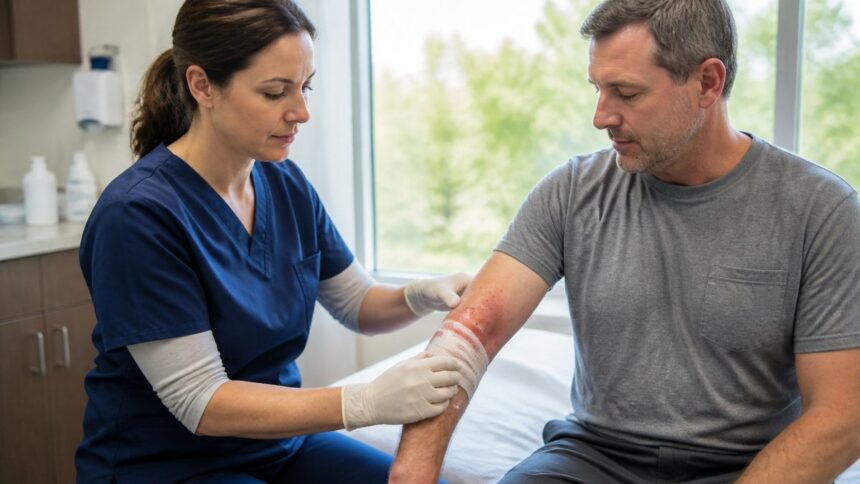
A healing wound usually looks calmer over time. It becomes less painful and more normal-appearing as tissue repairs. When infection develops, appearance, sensation, and drainage can change. Learn to recognize the signs of infection in wound care.
Redness and Swelling
Mild redness around a fresh wound can appear during normal healing and fades after a short time. When infection develops, the red area may spread outward from the wound edge, and the color may look brighter. The skin can also feel tight or puffy because fluid builds up in the tissue.
Swelling that increases after the first days of recovery deserves attention, because infection may be pushing fluid into the area. The skin can look shiny, and the wound may feel more painful than it did earlier in the week. If swelling makes it difficult to move the nearby joint, it could be problematic.
Abnormal Drainage or Pus
Drainage patterns reveal much about how a wound responds to care; changes can signal infection. Clear or slightly yellow fluid that lessens over time often matches normal healing. Thick, cloudy, or foul-smelling drainage suggests that bacteria are present in the wound.
Watch for these changes in wound fluid, because each one may indicate infection rather than simple irritation:
- Sudden increase in the amount of drainage
- Green, gray, or dark yellow discharge
- New or strong odor from the wound
- Drainage that soaks through dressings quickly
If dressings that once stayed dry now become wet quickly, the wound environment has likely changed. That shift can break down healthy tissue and slow healing. Regular wound care visits help track these changes.
Pus often appears thicker than normal drainage, and it may collect in pockets or form a visible layer. When pus forms, the body is reacting to bacteria, and the tissue around the wound often grows more tender. This combination of symptoms usually needs medical attention and sometimes a change in dressing type or cleaning method.
Heat and Spreading
Infected wounds often feel warm to the touch, and the heat may extend beyond the immediate edges. The temperature difference between the wound area and nearby skin can be noticeable. Heat reflects increased blood flow and inflammation as the body responds to invading bacteria.
Spreading redness, streaks, or blotches around the wound may develop when infection moves into surrounding tissue. These changes can appear even if the wound opening looks small or shallow. When the affected area grows larger from one day to the next, infection may be progressing under the skin.
Not Healing
A wound that stalls in the same stage for weeks may be infected and need a different approach. Healthy tissue usually becomes stronger and more organized over time, and the wound edges slowly pull together. When infection persists, the surface can look pale, gray, or fragile; it may reopen after partial healing.
Ongoing or worsening pain also suggests healing isn’t progressing as expected. Infection could be present. When pain medicine no longer brings relief, infection or slow healing can be to blame.
Slow healing can affect daily routines and lead to more complex care needs. Regular follow-up with a provider who focuses on wound care supports closer monitoring. Early attention to delayed healing reduces the chance of larger procedures or hospital stays.
Get Professional Wound Care
Any wound that shows signs of infection benefits from prompt medical evaluation, because early treatment supports safer recovery. A professional can examine the wound, review your health history, and recommend dressings or therapies tailored to your needs. If you notice issues with a wound, schedule an appointment for assessment and guidance.