
Dentures replace missing teeth with an artificial dental arch; this restores the bite force needed to chew food properly. Patients who have lost several or all of their natural teeth use dentures to break down food, maintain proper nutrition, and support facial muscles. A correctly fitted set can return chewing function close to that of natural teeth. Here is more information on who benefits from these dental devices, how they function, and what patients can expect once they begin wearing them:
How Do Dentures Work?
Dentures sit directly on the gums; suction, adhesive, or a combination of both holds them in place. A dentist takes precise impressions of the patient’s mouth so that the device fits the unique shape of the jaw and remaining tissue. This custom fit allows the dentures to stay stable during normal activities like eating and talking.
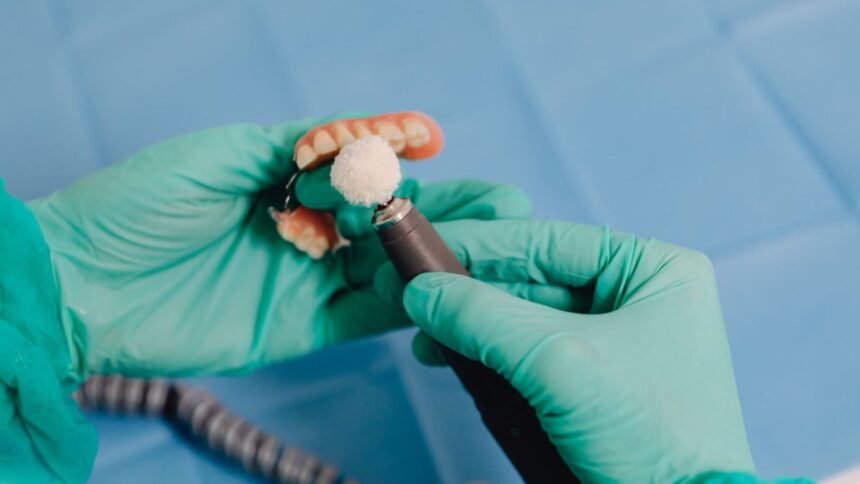
Modern dentures use durable materials designed to mimic the appearance and function of natural teeth. The base rests against the gums, while the visible teeth are shaped to match a natural bite pattern. The fit affects comfort and performance, so regular adjustments keep dentures working as intended over time. When a denture begins to loosen, the dentist can reline or reshape the base, and the patient regains a secure fit.
How Is Chewing Ability Restored?
Chewing requires a stable bite surface and enough force to break down food. Dentures restore this surface by replacing missing teeth with a complete, aligned set; this set distributes pressure evenly across the jaw. Because the gums are sensitive at first, patients typically start with soft foods and gradually reintroduce firmer textures as they adjust to the new fit.
The jaw muscles and gums need time to adapt. When patients first wear dentures, the pressure of chewing can feel unfamiliar, so they should practice with small bites and chew on both sides of the mouth. This approach builds strength and balance. Within a few weeks, patients may find that their chewing ability improves as muscle memory develops.
Certain foods may remain difficult to chew. Sticky, hard, or tough foods cause the most trouble, and examples include caramel, whole nuts, and tough cuts of meat. Cutting food into smaller pieces and chewing slowly reduces strain on the gums, which helps keep the dentures in place. If persistent discomfort or slipping occurs during chewing, a dentist can evaluate the fit and make the necessary adjustments.
What Are the Benefits?
Dentures provide several functional and structural benefits beyond restoring chewing. The main benefits include:
- Improved nutrition: Patients can eat a broader range of foods, including fruits, vegetables, and proteins that require more effort to break down.
- Facial structure support: Dentures support the cheeks and lips, which prevents the sunken appearance that often follows tooth loss.
- Clearer speech: Teeth help form certain sounds, so speech clarity improves once the missing teeth are replaced.
These benefits make dentures a practical, long-term solution for restoring daily function after tooth loss.
Consult a Dentist Today
Dentures offer a reliable way to restore chewing ability, protect facial structure, and support long-term oral health. If you are evaluating dentures, schedule a dental consultation to discuss fit, material options, and adjustment timelines specific to your needs. A dentist can determine whether dentures are right for you, and they will guide you through the process.