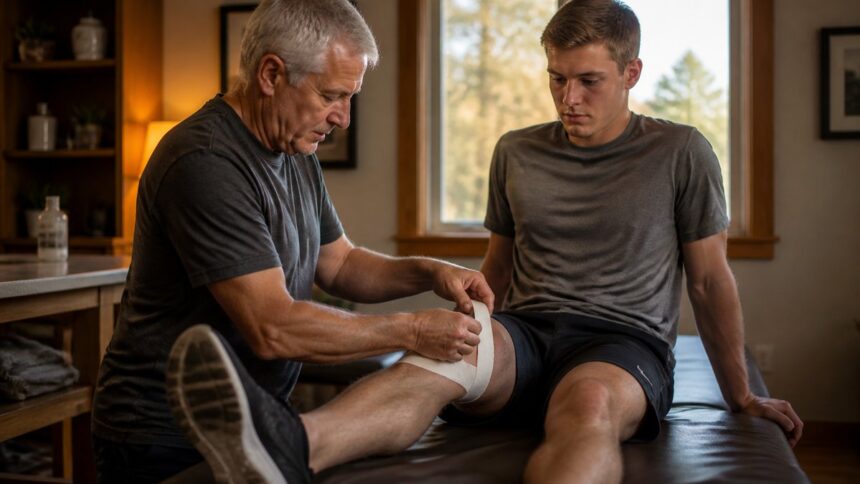
Athletes rely on repeatable movement, steady training, and thoughtful recovery, so small changes in joint health or muscle function influence performance over time. Sports medicine brings those pieces together by focusing on how the body responds to physical stress. When care lines up with an athlete’s goals, it supports both short-term performance and long-term participation in a chosen sport.
What Is Sports Medicine?
Sports medicine focuses on the way exercise, competition, and daily movement affect the body; it looks at how tissues respond to both sudden and repetitive loads. The field draws on orthopedics. Some athletes seek support after an injury, while others may work with a sports-focused team to adjust training plans before problems develop.
Because athletes stress the same structures, sports medicine can place special attention on the muscles, tendons, ligaments, and joints that carry that workload. A provider may evaluate how those structures move together, and they look for patterns that hint at overload or poor mechanics. This approach can link performance questions with the medical side of joint and soft tissue health. This field also addresses the demands of different sports; each sport may load the body in distinct ways. When a provider understands those demands, they can tailor guidance to match the specific positions, movements, and training cycles that matter to that athlete.
What Does It Treat?
Sports medicine teams see a wide range of injuries, and many of them involve soft tissues that respond to both sudden trauma and gradual overuse. Sprains, strains, and bruises can follow a single event, disrupting training even when the initial pain fades quickly. Overuse problems usually build slowly. They appear when the same motion stresses one area more than it can adapt. Common issues include joint sprains, muscle strains, and tendon irritation; each one interacts with training volume and technique.
What Does It Involve?
Sports medicine visits may start with a detailed history. The physical exam often looks at strength, flexibility, balance, and movement patterns, and it can include sport-specific motions. When needed, imaging studies or other tests help clarify the structures involved, so treatment aligns with the actual source of symptoms.
Once the evaluation is complete, the plan can blend activity modification, targeted exercises, and guidance on load management. Some athletes adjust training intensity or volume for a short period; others may shift to cross-training that keeps fitness moving forward without stressing the irritated area. Structured rehabilitation focuses on restoring range of motion and strength in a sequence that respects tissue healing timelines.
Sports medicine can also spend time on prevention strategies that support ongoing performance, and these strategies often address warm-up routines, recovery habits, and technique. Athletes may learn how to progress workloads gradually, how to recognize early warning signs of overload, and how to match strength and mobility work to their sport. When those elements stay in balance, training sessions can place stress where the body is ready to handle it; that balance supports more consistent performance across a season.
Seek Professional Orthopedic Care
Professional guidance also helps align expectations with the body’s current capacity; it offers a framework for progressing safely after an injury or a period of reduced training. When questions about pain, stiffness, or recurring issues arise, timely evaluation can keep small problems from shaping an entire season. Athletes who integrate sports medicine input into their routine may gain an understanding of how their bodies respond to workload.