

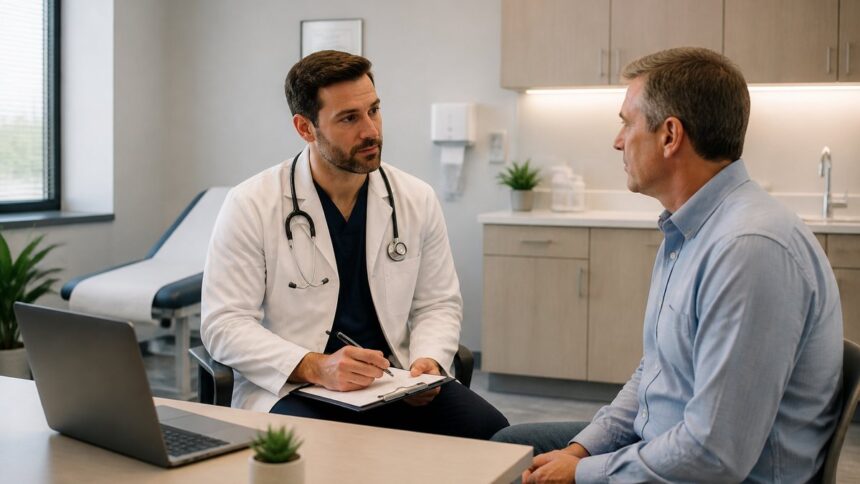
STD testing evaluates for infections that spread through sexual contact, and it uses straightforward exams and lab tests. The process typically includes a discussion of symptoms, a review of recent sexual activity, and specific sample collection. Testing supports early diagnosis, which guides treatment choices and reduces transmission risk. Here is what to expect during the testing process:
Symptom Discussion
An STD testing visit starts with a direct discussion of current symptoms. You describe issues such as discharge, pain, rashes, or urinary changes, and the clinician asks follow-up questions. When symptoms are present, they may point toward certain infections and influence which tests are ordered. Some infections stay silent for long periods, so the clinician also asks about exposures.
During this conversation, the clinician reviews recent partners, barrier use, and any previous infections, and they document timelines. They ask about the types of sexual contact and whether partners had known infections. While you answer only what you are comfortable sharing, more detail leads to more targeted testing.
Test Selection
After the history, the clinician selects tests based on symptoms, exposure risk, and the time since contact. Some infections use urine or blood testing alone, while others rely on swabs from genital, throat, or rectal sites. One visit may involve several sample types, and each one typically takes only a short time. Test types include:
- Urine tests that look for specific bacteria in the urinary tract
- Blood tests that assess for viral or bacterial antibodies and antigens
- Throat swabs that detect infections acquired through oral contact
- Swabs for rectal infections acquired through receptive anal contact
Results Discussion and Treatment Plan
Once results return, the clinician reviews each test and explains what a positive or negative result means. Some infections appear quickly after exposure, and others require repeat testing after a window period. When results are unclear, the clinician may repeat a test or add another type of assay. The timing of results varies by test type.
If an infection is diagnosed, the clinician outlines treatment options and expected timelines for improvement. Treatment typically involves oral or injectable medication. You receive instructions on how to take each medication, and you also learn which symptoms warrant follow-up.
Partner management is part of the discussion, because untreated partners risk reinfection and ongoing spread. The clinician explains which partners need testing, and they may provide written information you can share. In some settings, prescriptions or guidance are available for partners.
Prevention Options
After treatment planning, the conversation often shifts to prevention strategies tailored to your sexual practices. The clinician reviews consistent barrier use, vaccination where appropriate, and regular screening intervals based on risk factors. They also address substance use, as it sometimes affects decision-making during sexual activity. This step links short-term treatment with longer-term health planning.
For higher-risk exposures, medication-based prevention such as PrEP for HIV may enter the discussion, and dosing schedules are explained. The clinician may also describe post-exposure options when contact occurred recently, and these rely on strict timing. Prevention planning turns a single testing visit into an ongoing risk reduction strategy.
Schedule STD Testing Near You
STD testing follows a clear structure, from symptom review through tailored prevention planning. If you have new symptoms, recent exposure, or a change in partners, scheduling a visit helps identify infections early. Local immediate care clinics often offer testing with flexible hours, and many accept walk-in visits. Reach out to a nearby provider to arrange screening that aligns with your health needs and risk profile.