
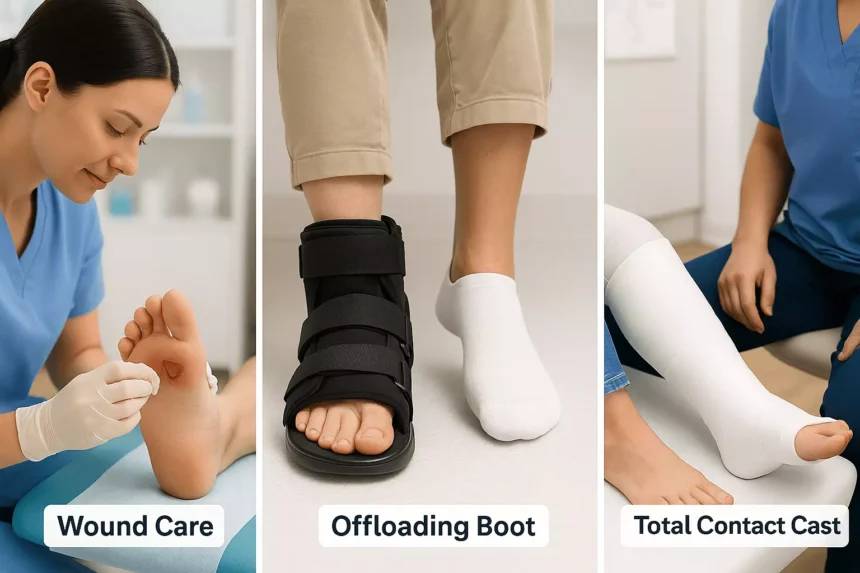
Wound care describes a specialized approach to treating open sores called ulcers. Some wounds heal on schedule, but others stall and become long-term problems. Non-healing wounds affect about 3 to 6 million people in the United States; people 65 and older account for 85% of these cases, while the total cost exceeds $3 billion per year. Wound healing also reflects local and systemic health factors, so care addresses more than the wound itself.
Understanding Wound Care
Wound healing consists of four continuous, overlapping phases: hemostasis, inflammation, proliferation, and remodeling. The phases occur in sequence, but they also overlap in time. Each phase must occur within a proper time frame; when any phase becomes delayed or disrupted, healing stalls and the wound can enter a chronic state. Proper wound care supports the local conditions involved in healing, while systemic health factors also affect how the body repairs damaged tissue.
Oxygenation and infection directly affect wound healing. Chronic wounds are notably hypoxic; tissue oxygen tensions in these wounds measure 5 to 20 mm Hg compared with control tissue values of 30 to 50 mm Hg. When oxygen levels remain low, cellular processes involved in tissue repair become impaired, while bacteria in underlying tissue prolong inflammation and delay healing. Infection and hypoxia interact; both can interfere with the phases required for normal wound closure.
Addressing Systemic Factors
Systemic factors affect the body’s ability to repair damaged tissue. Diabetes is a major factor, and diabetic foot ulcers develop in an estimated 15% of people with diabetes. These ulcers precede 84% of diabetes-related lower leg amputations, while obesity is associated with hypoperfusion, pressure ulcers and wound dehiscence. Smoking reduces tissue blood flow through vasoconstriction, and this reduction causes tissue ischemia that disrupts inflammatory and proliferative phases. Age, psychological stress and certain medications also alter the body’s capacity to heal, so these factors can affect wound recovery even when the injury itself receives local care.
Supporting Healing With Nutrition
Nutrition supplies the building blocks for tissue repair. Protein deficiency impairs collagen synthesis and fibroblast proliferation, and it also weakens the immune response that helps protect a wound from infection. Vitamins C, A and E support collagen formation and antioxidant activity, while zinc, iron, copper and magnesium act as cofactors in protein and collagen production. Proper local dressing is also a documented factor in wound healing, and appropriate dressings help maintain the local environment needed for repair. Wound care therefore addresses both the wound environment and nutritional factors that support tissue repair.
- Vitamins C, A and E support collagen formation and antioxidant activity.
- Zinc, iron, copper and magnesium act as cofactors in protein and collagen production.
Schedule an Evaluation Today
Diabetes, heart and artery problems, and vascular disease can contribute to chronic ulcers. Vascular disease is a factor in the majority of chronic, nonhealing wounds, while lymphedema, pressure injuries, burns, trauma and non-healing surgical incisions also contribute to wounds requiring care. Treatment addresses the underlying cause, and options for circulation problems include compression stockings and minimally invasive vein procedures. Sclerotherapy, endovenous laser therapy, radiofrequency ablation and ambulatory phlebectomy target affected veins, while balloon angioplasty addresses narrowed arteries. Debridement removes dead tissue and debris, and special dressings maintain the wound environment needed for repair. Some patients also receive medications that improve circulation or prevent blood clots. Skin discoloration, frequent skin infections or a sore that does not heal warrant professional wound care evaluation.