Lens choice shapes how well eye glasses match daily demands, along with other eyesight needs like reading. Different lenses handle distance in different ways, and each option has trade-offs. Understanding how exams, prescriptions, and lifestyle details interact helps you talk with an eye doctor about what you want from your new pair.
Who Benefits From Eye Glasses?
People with refractive errors use eye glasses to redirect light so it focuses more precisely on the retina. Some individuals have nearsightedness and see better up close than far away, and others have farsightedness that makes close work more difficult. A third group has astigmatism, which leads to distorted or shadowed images because the eye bends light unevenly.
Age also affects how lenses function, and adults may notice changes as they grow older. The natural lens inside the eye can become less flexible as the years pass, and near tasks such as reading small print or viewing a phone screen start to become more strenuous. Single-vision lenses handle distance or near work, and multifocal designs support both ranges in one pair.
What Does an Exam Involve?
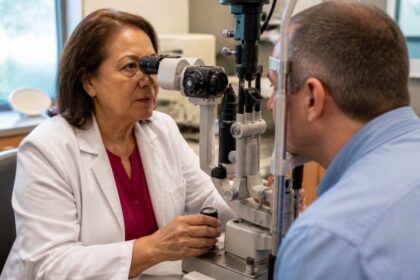
An eye exam may begin with a discussion of visual history, including questions about current symptoms. Many exams include checks of eye pressure, and they also include a look at the front and back of the eye. The doctor can view structures such as the cornea, lens, and retina.
How Are Lenses Chosen?
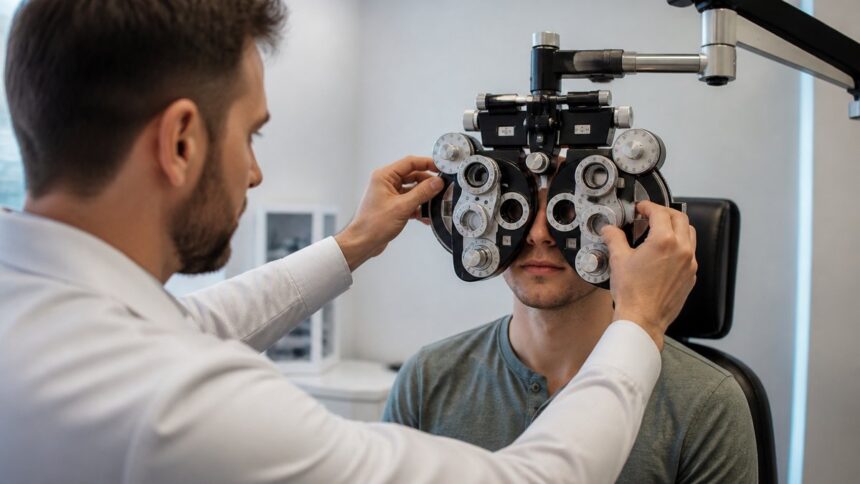
The doctor checks how well each eye sees at different distances. Lenses are then placed in front of the eyes in various combinations, with the patient reporting which lens choices look clearer. The exam may measure refractive error, and it evaluates eye health too. Instruments measure how light focuses in the eye, and they can help estimate a starting prescription. The doctor refines these measurements with subjective testing; the process may lead to a precise prescription for eye glasses that reflects both objective data and patient feedback.
Lens choice starts with the prescription numbers, and it also draws on lifestyle details. Single-vision lenses correct one focal distance, and they work well when someone mainly needs help with either near or far tasks. Multifocal options, such as bifocal or progressive lenses, address more than one distance. They can allow a smooth shift between reading, intermediate work, and distance viewing.
Consult an Ophthalmologist
An ophthalmologist evaluates both vision and eye health, and that combination of data shapes lens recommendations. They match prescription strength and lens design with specific visual tasks, and they adjust those choices as prescriptions change. When you describe how you use your eyes at work, at home, and during hobbies, the discussion may lead to lens options that match those routines. Eye glass prescriptions evolve, so periodic exams keep your lenses aligned with current needs. During these visits, an ophthalmologist can review how your current pair performs; they also suggest adjustments in features when your daily activities shift. This ongoing process keeps your eye glasses functioning as practical tools that match real-world vision demands.