

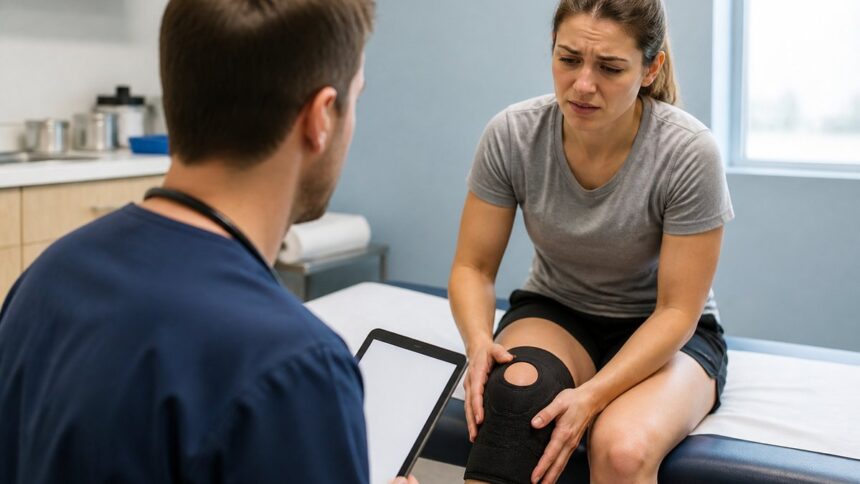
Orthopedic injuries, such as sprains, strains, fractures, and joint dislocations, can cause pain, swelling, and limited mobility. While minor injuries may improve with rest and basic care, others require prompt medical attention to prevent complications. Here are some signs that indicate when to visit urgent care for an orthopedic injury:
Which Injuries Require Urgent Care?
Some orthopedic injuries happen during sports, yard work, or simple falls at home. Urgent care clinics generally treat injuries that cause pain, swelling, or limited movement while the limb remains stable and intact. Here are some common injuries providers attend to at an urgent care:
- Sprains: A ligament, the tissue that connects bones, stretches or tears, often in the ankle, knee, or wrist.
- Strains: A muscle or tendon overstretches, commonly in the back, hamstring, or shoulder.
- Minor fractures: Small breaks in fingers, toes, or wrists where the skin stays unbroken.
- Dislocated fingers or toes: A small joint shifts out of its normal position.
- Arthritis flare-ups: Joint pain or swelling increases suddenly and interferes with daily tasks.
- Overuse injuries: Repeated motion irritates a tendon, as in tennis elbow or runner’s knee.
When Is Emergency Care Necessary?
Some injuries require the equipment and specialists found in a hospital emergency department. Call 911 or go to the nearest emergency room if a bone breaks through the skin, a limb looks visibly bent out of shape, or you lose feeling in an arm or leg. Heavy bleeding, a suspected head or neck injury, and pain after a car crash or major fall also require emergency care. A hip injury in an older adult also often needs emergency evaluation, and the person should not try to walk on it. When you are unsure about the severity of an injury, choose the emergency room.
What Happens During the Visit?
Most orthopedic urgent care visits follow a predictable sequence. Staff check you in, record your symptoms, and direct you to an exam room. The following stages outline what generally follows.
Assessment of the Injury
A provider asks how the injury happened, where the pain is located, and which movements make it worse. They then examine the area. They check for swelling, tenderness, bruising, and range of motion. Bring a list of your current medications, and mention any past injuries or surgeries in the same area.
Imaging and Treatment
If the provider suspects a fracture or dislocation, they order an X-ray, which some clinics perform on-site. Treatment depends on the findings and may include a splint, brace, sling, crutches, or a referral to an orthopedic specialist. Before you leave, the provider will give you written instructions, and you should ask questions about anything that is unclear.
How Should You Manage Recovery?
Aftercare instructions play a key role in recovery once you return home. Some providers recommend the RICE method: rest, ice, compression, and elevation. Rest limits strain on the injured area. Ice, a compression wrap, and elevating the limb above heart level can manage swelling.
Wear any splint or brace exactly as directed, and don’t remove it unless your provider tells you to. Schedule follow-up appointments promptly, especially when the provider refers you to an orthopedic specialist or physical therapist. Contact a medical professional right away if pain increases, numbness develops, or the skin around a splint changes color.
Schedule Your Urgent Care Appointment
Orthopedic urgent care treats sprains, strains, minor fractures, and joint pain flare-ups that need prompt attention. Severe injuries, such as open fractures or loss of feeling, require emergency care instead. Knowing the difference and following aftercare instructions can help you make informed decisions about your recovery. To address your orthopedic injuries, contact an orthopedic urgent care near you to schedule your appointment or walk in for immediate care today.